One Click Answers

OCACooking

Share tool
FacebookPinterestEmail

Ingredient Substitute Finder

What can I use instead of an ingredient I am out of?

Tell us what you are out of and what you are making, and get substitutes with the right amount for your recipe.

About this tool & how to use it

What the Ingredient Substitute Finder does

Finds a substitute for an ingredient you are out of, with the right amount for what you are making. Options are ranked, with what each changes in taste and texture, and can put what is in your pantry first.

How to use the Ingredient Substitute Finder

  1. Type the ingredient you are missing, such as butter or buttermilk, and pick it from the list.
  2. Choose what you are making. The best substitute changes with the recipe: butter behaves differently in cookies, in a pie crust and in a sauté pan.
  3. Only the ingredient is needed. To have the amounts worked out for your recipe, open the optional amount section and enter how much it calls for in cups, spoons, millilitres or, for some ingredients, grams (eggs and garlic cloves are counted). Without an amount you get the substitutes for one standard amount.
  4. If you like, list what you have in the pantry or choose a diet to leave out, then press Find substitutes.
How much does the recipe call for? (optional)

Leave this closed to see the substitutes for one standard amount. Add an amount to have them worked out for your recipe. Fractions such as 1/2 are fine.

Options: what I have, diets, metric (optional)
Leave out options that contain
Show amounts in

One click answer

Name the ingredient and press Find substitutes. Your answer opens in a window.

Your substitutes

      Everything happens in your browser: what you type is never sent anywhere or stored. These are general home-cooking guides, and no substitute gives an identical result. Check the labels of products for allergens.

      Common swaps at a glance

      The most common substitutions for one standard amount. Choose your recipe above for the right answer for what you are making.

      If you are out ofMakingUse instead
      1 cup buttercakes and quick breads1 cup stick margarine (Closest Match)
      1 cup coconut oil (Good Alternative)
      1 eggcakes and quick breads3 tbsp aquafaba (Good Alternative)
      1/4 cup mashed ripe banana (Good Alternative)
      1 cup buttermilkpancakes and waffles1 cup whole milk + 1 tbsp lemon juice (Closest Match)
      3/4 cup plain yogurt + 1/4 cup whole milk (Good Alternative)
      1 cup heavy creamsauces1 cup evaporated milk (Good Alternative)
      1 cup full-fat coconut cream (Good Alternative)
      1 tsp baking powdercakes and quick breads1/4 tsp baking soda + 1/2 tsp cream of tartar (Closest Match)
      1/4 tsp baking soda + 1/2 cup buttermilk (Works With Changes)
      1 tbsp cornstarchsauces2 tbsp all-purpose flour (Good Alternative)
      1 tbsp arrowroot powder (Good Alternative)
      1 cup brown sugarcookies1 cup granulated sugar + 1 tbsp molasses (Closest Match)
      1 cup coconut sugar (Good Alternative)
      1 cup self-rising flourcakes and quick breads1 cup all-purpose flour + 1 1/2 tsp baking powder + 1/4 tsp salt (Closest Match)
      1 tbsp lemon juicedressings1 tbsp lime juice (Closest Match)
      1 1/2 tsp white wine vinegar (Works With Changes)
      1 cup honeycakes and quick breads1 cup maple syrup (Closest Match)
      1 1/4 cups granulated sugar + 1/4 cup water (Good Alternative)

      Related tools

      Try another answer

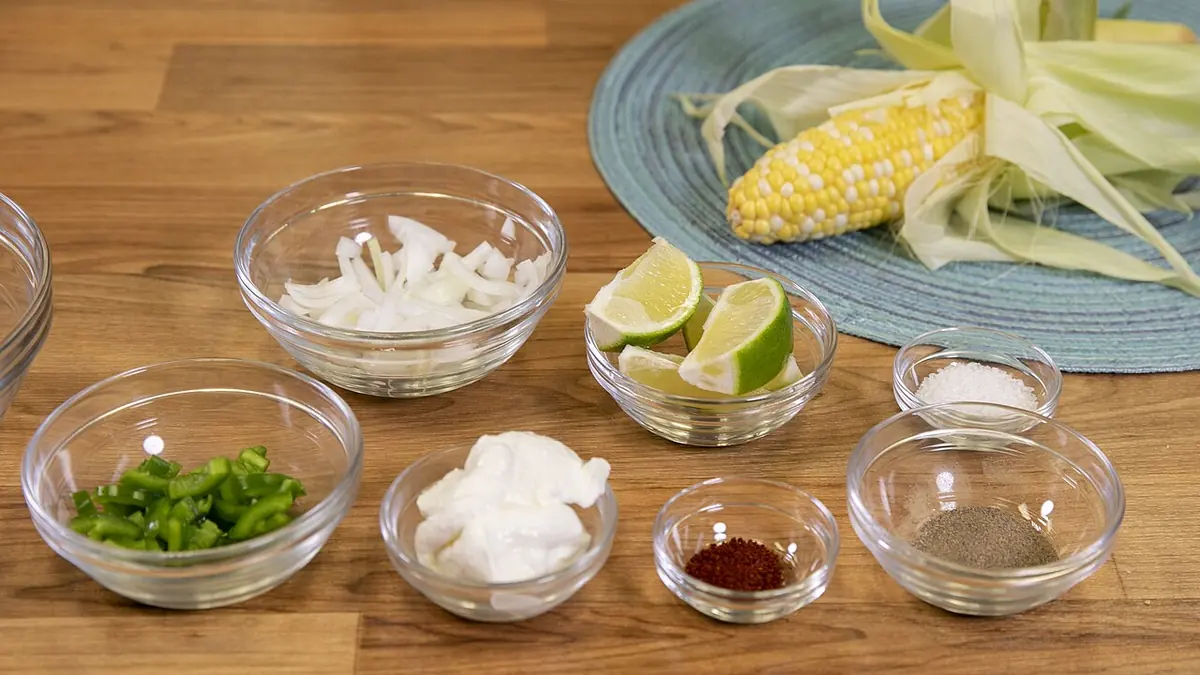
      Small bowls of prepared ingredients on a wooden counter
      Photo: Alabama Extension (CC0, via Wikimedia Commons)

      How it works

      Every substitute here is a rule written for one ingredient: how much of what to use for one standard amount (1 cup of butter, 1 egg, 1 tablespoon of cornstarch), which kinds of recipe it suits, what it changes and how to prepare it. When you enter an amount, the page multiplies the rule, so 3 tablespoons or 2 cups both work.

      The recipe matters because ingredients do jobs. Butter adds fat and flavor, but in a pie crust it also has to stay solid so the pastry turns out flaky, which liquid oil cannot do. In a sauté pan its only job is to carry heat, and oil does that well. The page lists a substitute for a recipe only where it can do the ingredient's job, and tells you what it left out and why.

      The labels describe how well an option suits your recipe. Closest Match behaves most like the original. Good Alternative works well with small differences. Works With Changes needs an adjustment such as less liquid or a lower oven. Only for Certain Recipes is a last resort. None of them gives an identical result.

      Amounts are shown as practical kitchen measures (to the nearest eighth or third of a cup, half a tablespoon or eighth of a teaspoon) and in metric. When a measure has been rounded, the page says "about".

      When not to substitute: the page gives no substitutions for canning, pickling, preserving or fermenting, because the acidity, sugar and salt in those recipes are what keep the food safe. Delicate recipes that are built on eggs, such as custards, soufflés and meringues, have no reliable swap either, and the page says so.

      Everything happens in your browser. The ingredients, recipe type, amounts and pantry list you enter are not sent or stored.

      Assumptions

      • Measures are US kitchen measures: 1 cup is 8 US fluid ounces, about 237 mL. An egg means a large egg.
      • Grams are converted to cups only for ingredients that have a common standard weight, for example 227 g of butter, 200 g of granulated sugar and 125 g of all-purpose flour per cup. Real weights vary with how an ingredient is packed, so use cups where your recipe does.
      • These are guides for ordinary home cooking, written from widely used household practice. A substitute will not give an identical result: taste, texture, browning and rise can change, and the page says how.
      • Dietary choices are a guide only. Always check the label of every product for allergens and ingredients, and ask a health professional about allergies.
      • Only ingredients where we can give reliable advice are listed. If yours is missing, there is no list for it yet.

      When to use this

      • You are halfway through a recipe and are out of butter, eggs, buttermilk or another ingredient.
      • You want the right amount of the substitute, not only its name.
      • You want to know how the swap may change taste or texture in what you are making.

      Common mistakes

      • Swapping oil for butter cup for cup. Butter is partly water, so use about three-quarters as much oil, and not in frosting or flaky pastry, which need a solid fat.
      • Using one swap for every recipe. The right substitute depends on the job the ingredient does, which is why the page asks what you are making.
      • Looking for an egg substitute in custard, quiche or meringue. There is no common substitute that works in those.
      • Relying on it for a food allergy. It can leave out options that contain common allergens, but it is a guide, not a safety check: read the label of every product you use.

      Ingredient Substitute Finder example

      Input: Out of buttermilk: 1 cup, for pancakes

      Result: Use 1 cup of whole milk plus 1 tbsp of lemon juice (or white vinegar), stirred and left for about 5 minutes. It is the Closest Match. Plain yogurt thinned with milk is a Good Alternative.

      Ingredient Substitute Finder questions

      Can I substitute oil for butter?

      Often, in cakes, pancakes and sautéing: use about three-quarters as much oil as butter, because butter is partly water. Not in frosting or flaky pastry, which need a solid fat. Choose your recipe above to see what fits.

      How do I replace an egg?

      It depends on the recipe. In cakes and pancakes, about 1/4 cup of unsweetened applesauce or mashed ripe banana replaces one egg. In cookies, a mix of 1 tablespoon of ground flaxseed and 3 tablespoons of water can bind. For custards, quiche and meringue there is no common substitute that works.

      Why does it ask what I am making?

      Because the right substitute depends on the job the ingredient does. A swap that is fine in a sauce can ruin a cookie, so one answer for everything would sometimes be wrong.

      Will the result be the same as the original?

      No. Expect small differences in taste, texture or browning. The page tells you what to expect for each option.

      Can I use it for food allergies?

      You can leave out options that contain common allergens or animal products, but it is a guide and not a safety check. Always read the label of every product you use.

      Are my ingredients stored?

      No. Everything stays in your browser and is not sent anywhere.

      Last reviewed 2026-10-20. Report an incorrect result

      Got another question?

      Free, no account. Answers show how they were worked out.